What Are the Main Types of Accent Chairs?
The main types of accent chairs include club, wingback, slipper, barrel, lounge, and mid-century styles. Compare their shapes, arms, height, and footprint to choose a chair that suits your room and how you’ll use it.
On this page (9 sections)
- What are the main types of accent chairs?
- What makes a club chair different?
- What is a wingback accent chair?
- When does a slipper chair make sense?
- How is a barrel chair shaped?
- What is a lounge chair?
- What does “mid-century” mean for an accent chair?
- How should you choose among the types of accent chairs?
- Which type of accent chair should you choose?
The main types of accent chairs include club, wingback, slipper, barrel, lounge, and mid-century styles. Their shapes affect how they fit a room and how you can use them, so start with the chair’s job before picking a look.
Some style names overlap. A barrel chair can also be a club chair, for example, so compare the silhouette, dimensions, and details instead of relying on the label alone.
What are the main types of accent chairs?
Club, wingback, slipper, barrel, lounge, and mid-century chairs are common accent chair types. Each has recognizable features, but the proportions, upholstery, and construction vary by chair.
- Club chair: An upholstered seat with arms and a substantial profile. The back may be rounded or squared.
- Wingback chair: A taller back with side panels, or “wings,” that extend toward the arms.
- Slipper chair: An armless chair, often with a low profile and open sides.
- Barrel chair: A curved back that wraps around the sides, often forming a tub-like shape.
- Lounge chair: A broad term for indoor chairs made for relaxed sitting. It can describe several silhouettes.
- Mid-century chair: A design style often associated with clean lines and visible, tapered legs. The seat shape and arms can vary.
A chair may fit more than one category. A barrel chair with arms may also be described as a club chair, while a wingback can look traditional or modern depending on its upholstery and leg design.
For a broader overview of proportions and shopping decisions, read our accent chair guide.
What makes a club chair different?
A club chair usually has a substantial upholstered seat and arms. It suits a living room or reading corner where you want a defined seat with support at the sides.
The BELLEZE Linen Barrel Club Chair has a deep barrel shape, curved backrest, wraparound arms, and soft foam padding. Its 22.75 in depth and 26.5 in width make it a clear option for a corner or smaller seating area, though the arms and rounded outline need room around them.
This chair is a good fit if you want an enclosed shape and wipe-clean faux leather. Skip it if you need an armless seat or prefer a chair with a taller back; its height is 29.37 in.
On arrival, attach the legs according to the instructions and adjust the foot pads if the chair wobbles. Wipe the faux leather with a damp cloth.
See what defines a club chair for a closer look at the style, or compare it with other armchairs in our club chair versus armchair guide.
What is a wingback accent chair?
A wingback accent chair has a high back with side panels that project toward the arms. Choose one when you want the chair’s taller outline to stand out or want a back that rises above nearby low furniture.
The Mid-Century Wingback Armchair has rounded arms, button tufting, tapered wood legs, and a 38 in overall height. At 31 in wide and 30 in deep, it takes more floor space than a narrow armless chair.
Its fabric upholstery and high back suit a cozy reading spot, but it’s a poor choice for a tight walkway or beneath a low window. Assembly is required, and the chair’s fabric should be cleaned with a dry cloth or vacuum as recommended.
Check the height beside nearby furniture and under windows before buying. For more on the silhouette, see what a wingback chair is and our guide to choosing a high-back accent chair.
When does a slipper chair make sense?
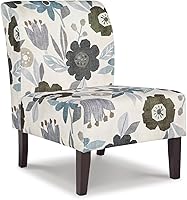
A slipper chair has no arms, leaving its sides open and its footprint visually light. It can suit a bedroom, reading nook, or small room where arms would make the seating area feel crowded.
The Signature Design by Ashley Armless Chair measures 22.25 in wide, 30.75 in deep, and 31.5 in high. Its attached cushions and polyester upholstery make it a practical choice for a compact reading perch, and the fabric’s SW cleaning code allows spot cleaning.
Choose this style if you value an open shape and don’t need arm support. Skip it if you prefer arms to rest on or want a shallow seat, since this chair’s depth is 30.75 in.
Assembly involves attaching the wood legs and tightening the bolts. Measure the available depth and leave room to sit down and stand up without blocking a door or path.
Our guide explains what a slipper chair is, and you can compare its footprint with armchairs for small spaces.
How is a barrel chair shaped?
A barrel chair’s curved back sweeps around the sides of the seat. This rounded shape can feel inviting in a bedroom, living room, or waiting area, but check its actual dimensions because a curved outline can still occupy substantial floor space.
Barrel describes the chair’s shape, not its fabric or base. Some have fixed legs, while others swivel.
If you choose a swivel version, allow clear space for the chair to turn without hitting a table or wall.
The CANMOV Swivel Accent Chair With Armrest has a curved back, teddy fleece upholstery, and a 360-degree swivel base. At 29 in wide and 28 in deep, it offers a turning seat with a 21 in seat width and 22 in seat depth.
This chair suits a room where you’ll often turn between people or different parts of the space. Skip it if the chair would sit close to a wall or table, or if you prefer smooth upholstery over teddy fleece.
Assemble it with the included tools, then check that the base can rotate freely.
What is a lounge chair?
A lounge chair is an indoor chair for relaxed sitting, but the term covers several shapes. Some lounge chairs have arms and broad seats; others overlap with club or barrel styles.
Look at the seat dimensions, back shape, and how upright or relaxed the chair appears rather than assuming that “lounge” means one fixed design. The word may also refer to other types of furniture, so our guide to lounge chairs for a living room focuses on indoor upholstered seating.
If you’re deciding between an accent chair and a lounge chair, read accent chair versus lounge chair to see how the terms are used.
What does “mid-century” mean for an accent chair?
Mid-century describes a design style, not one fixed chair shape. Tapered legs and clean lines are common visual cues, but a chair in this style may have arms, a high back, or a more open frame.
Check the actual measurements and construction, then decide whether the legs and upholstery work with your other furniture. Style alone won’t tell you if the seat fits your room or feels right for your intended use.
How should you choose among the types of accent chairs?
Choose by use, available space, and preferred support, then narrow your options by appearance. A reading seat may benefit from arms and a higher back, while an open bedroom corner may work better with an armless shape.
Use this checklist before buying:
- Measure the spot. Check width and depth, then account for the space needed to walk around the chair and use nearby furniture.
- Check the route in. Measure doorways and turns so the chair can reach the room.
- Match the seat to the task. Consider reading, conversation, occasional seating, or adding a visual accent.
- Decide whether you want arms. Arms create a more enclosed seat; a slipper chair leaves the sides open.
- Compare the back height. Check the chair against nearby furniture and windows.
- Plan for movement. A swivel chair needs room to turn without striking a wall or table.
- Check fabric care. Look at the care instructions and choose a material that suits your routine.
Common mistakes include buying by style name alone, ignoring depth, and placing a swivel chair where it cannot turn. Also consider how you’ll clean the upholstery before choosing a spot where spills or dust are likely.
For a living room, leave space for the chair to work with the rest of the seating rather than blocking a route through the room. Our guides to arranging accent chairs and how many accent chairs a living room needs can help you plan the layout.
Which type of accent chair should you choose?
Choose a club or barrel chair for arms and a rounded seat, a wingback for a tall profile, or a slipper chair for an open, armless shape. Pick a swivel barrel chair if turning toward different parts of the room matters, and consider a lounge or mid-century chair by its actual shape and dimensions.
Measure the spot first, then choose the style that suits your routine and care preferences. For another comparison of sizes and features, return to our accent chair guide.
Frequently asked questions
What are the most common types of accent chairs?
Common types include club, wingback, slipper, barrel, lounge, and mid-century chairs. The names describe features such as a rounded back, tall sides, no arms, or a low, relaxed seat.
Styles can overlap, so compare the shape, dimensions, and intended use before choosing.
Which accent chair is best for a small room?
An armless slipper chair or a compact chair with a narrow footprint can suit a small room because it takes up less visual space. Measure the floor area, doorway, and walking path first, then check the chair’s width and depth to confirm it fits.
What is the difference between a club chair and a barrel chair?
A club chair usually has a substantial upholstered seat with arms and a rounded or squared back. A barrel chair has a curved back that wraps around the sides in a tub-like shape.
Some chairs combine both features, so the labels aren’t exclusive.
Are accent chairs only for decoration?
No. An accent chair can add color or texture while giving you a seat for reading, conversation, or a bedroom corner.
Choose a shape and size that suit the task, and check the seat dimensions and care instructions before buying.