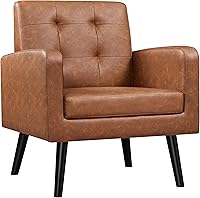
How to Choose an Armchair
To choose an armchair, start with the seat height and depth that fit how you sit, then match the frame, fabric and footprint to the room. Pick a chair you can stand up from easily and that leaves walking room around it.
On this page (10 sections)
- How do I measure seat height and depth for my body?
- What seat width and arm style suit how you use the chair?
- Which frame and legs hold up to daily use?
- How much floor space does an armchair really need?
- Should I pick a high back or a low back?
- How do I match fabric to my household?
- How do I match the chair to the room and the sofa?
- How do I check the chair will fit through the door?
- Which armchair would I pick for a reading corner?
- What should I do before I order?
To choose an armchair, start with the seat height and depth that fit how you sit, then match the frame, fabric and footprint to the room. A chair that fits your body and your space beats one that only looks good online.
The steps below walk through the body fit first, because a beautiful chair you can't stand up from is a daily annoyance. Then they cover frame, fabric and the measurements that stop a return.
Our short answer: pick the seat fit first, the frame second and the fabric last. Most armchair regrets trace back to skipping the seat measurements.
How do I measure seat height and depth for my body?
Seat height comes first. A seat height near 18 in lets most adults rest their feet flat with knees about level.
Shorter users often do better nearer 16 in, taller users nearer 19 in.
Seat depth decides whether your lower back reaches the backrest. A common target is 20 to 22 in for an average adult.
If your knees bend comfortably at the front edge with your back against the chair, the depth is close.
Measure both before you shop. Sit in a dining chair with a tape and a cushion to approximate a test.
If a store visit is possible, sit for five minutes rather than five seconds.
Height and depth interact. A seat that is both low and deep tips your pelvis back and pushes your knees up.
A seat that is high and shallow leaves your thighs unsupported. The best fit keeps your thighs level and your lower back in touch with the backrest.
The seat to floor height and the seat thickness are separate numbers. Thickness tells you how much foam sits over the frame.
A thick cushion can sit you higher than the bare frame height suggests, so read the seat to floor figure when a product page gives one. The HOMCOM Wingback, for example, has an 18.5 in seat to floor height over a 6 in thick seat.
That places the seat near the comfortable middle for an average adult.
How to sit-test an armchair in a store
Sit back fully and check three things. Your feet should rest on the floor without dangling.
Your lower back should touch the backrest without a gap. The front edge should not press behind your knees.
Stand up without pushing hard on the arms. A seat that's too low or too deep makes standing harder.
This matters more for older users and anyone with knee or hip trouble.
Then sit the way you'll actually use the chair. Reading calls for an upright back; lounging calls for more recline and a deeper seat.
An armchair that suits one posture may not suit the other.
If the store floor is hard, the chair will feel firmer than it will on carpet. Sit for the length of a chapter, not just the time it takes to glance at the price tag.
Rule: if you can't sit in it, buy the seat height and depth that match your body measurements, not the look.
What seat width and arm style suit how you use the chair?
Seat width decides who else can share the chair and how much you can shift. A seat near 19 in wide suits one average adult; 22 in or more gives room to tuck a leg or share with a child.
Arm style changes the feel as much as the fit. Rounded arms are softer and less formal; square arms read modern and give a crisper line.
Low arms let you lean sideways; high arms support your elbows while reading.
Check the arm height too. An arm around 22 to 25 in from the floor suits most seated adults.
Arms set lower can feel open but offer less support for a book or a cup. The HOMCOM Wingback has an armrest to floor height of 22.5 in and rounded arms, so it sits in the supportive middle of that range.
The back width matters for shoulder room as much as the seat width does. A back around 26 in wide gives most adults space without crowding.
A boxed-edge cushion keeps its shape and looks tailored; a loose cushion feels softer but needs fluffing. The HOMCOM chair uses a boxed edge cushion with welt trim on the arms, which holds a tailored line better than a loose slip.
Rule: match seat width to how many people use the chair, and match arm style to how you sit in it.
Which frame and legs hold up to daily use?
A solid wood frame is the baseline for daily use. It resists twisting better than particleboard, which can loosen at the joints over years of sitting.
Ask what the frame is made from before you buy.
Legs matter for stability as well as looks. Solid wood legs, such as eucalyptus, hold a screw thread better than softwood or plastic.
A square leg with a braced joint adds sideways strength, and a painted finish hides small scuffs and is easy to touch up.
Weight capacity is a spec worth checking. A chair rated around 350 lb handles most adults and a shared lap.
Below that, check the rating against who will use it. The HOMCOM Wingback is rated to 352 lbs over four eucalyptus wood legs, so it covers most adults and a lap-sitting child.
Check how the legs attach. Legs that bolt into a corner block spread the load better than legs screwed straight into the seat frame.
Look at how the seat is built, not just the frame. A spring pack or sinuous springs under foam give a springy seat; webbing or a solid board feels firmer.
The HOMCOM seat uses a spring pack with S springs and an elastic band over foam, which gives a little give underfoot.
Rule: choose a solid wood frame and wood legs for daily use, and check the weight rating against the heaviest person who will sit.
How much floor space does an armchair really need?
An armchair needs its footprint plus walking and leaning room. A typical chair takes about 3 ft by 3 ft, but the real number depends on the model's width and depth.
Measure the chair's outside dimensions, not just the seat. Arms and a reclined back add to the footprint.
Then add clearance to walk past and to lean back without hitting a wall. The HOMCOM chair measures 29.25 in wide by 33.75 in deep and 40.25 in high, so it needs a spot at least that wide before you add clearance.
In a living room, leave a path of about 2 ft to 3 ft between the chair and other furniture. In a bedroom or reading corner, you can go tighter, but leave room to stand up.
If the spot is small, a compact chair beats a wide one. A narrow armchair with a high back takes less floor but still gives good support.
Our guide to an armchair for small spaces covers the tightest options. A tall narrow chair can fit a corner that a low wide one cannot.
A 25-foot tape such as the {{product B000BQKXLE | A 25-foot power tape that locks in place, handy for room and doorway checks before the chair arrives.}} makes quick work of the measurements. Its self-locking blade holds the length while you walk to the other wall, and the 16 in stud markings help when you plan a spot near a wall fixing.
Rule: tape the chair's outline on the floor and mark the walking path before you order.
Should I pick a high back or a low back?
Pick a high back for support and a low back for openness. A high back supports your head and shoulders and suits reading and long sits.
A low back keeps sightlines clear and makes a small room feel larger.
A high back also works as a visual anchor in a corner. The HOMCOM Wingback Armchair is an example: {{product B07ZR2PG9Q | A button-tufted wingback with a 26.75 in back and a 20.75 in seat depth, built for upright reading.}} Its back sits 26.75 in high above the seat and 26.25 in wide, which gives most adults head and shoulder support.
Check the back height against the room. A very tall back can block a window or dominate a small space.
Measure from the seat to the top of the back, then compare with your sightlines. If you want head support, look for a back around 26 in or more above the seat.
That is a general guide; sit and check where your neck lands. Our guide to a high back accent chair goes deeper on fit.
Back style affects comfort as well as looks. The diamond tufting on the HOMCOM chair firms the back where you lean, where a plain back is flatter and softer.
Rule: choose a high back when you read or rest your head; choose a low back to keep a small room open.
How do I match fabric to my household?
Choose the fabric after the fit, not before. Tight weaves resist snags better than loose ones.
Treated polyester cleans more easily than untreated cotton or linen.
Households with pets and kids should favor mid to dark tones and tight weaves. Textured weaves hide scuffs better than flat ones.
The HOMCOM chair's cream white fabric and snow flannel texture look warm and hide small scuffs, but the light tone shows marks more than a mid tone would.
Ask how the cover cleans. Some fabrics spot-clean only; others have removable covers.
A washable slip or a removable cover extends the life of a light chair.
Check the fabric content too. Polyester is durable and holds color well.
Wool wears hard but costs more. Cotton feels soft but creases and stains more easily.
The HOMCOM cover is 100% polyester over foam fill, a practical combination for daily sitting.
When a spill happens, a foam cleaner helps on many upholstery fabrics. The {{product B0DXK59VYJ | A no-rinse foam that lifts everyday stains from sofas and chairs, for the spills a fabric cover picks up.}} can handle coffee, wine and grease on many covers.
Its foam works on everyday stains like soda and kitchen grease without a water wash.
Rule: match fabric to who sits in the chair and how it will be cleaned, then check the care label before you commit.
How do I match the chair to the room and the sofa?
Harmony beats an exact match. Pick a chair that shares the sofa's scale and one color or texture, then let the shape differ.
A matching suite can look heavy; one accent chair often looks more current.
Scale is the first check. A large chair beside a small sofa looks unbalanced.
Measure the seat height and back height against the sofa before choosing. A chair whose back rises well above the sofa back reads as a statement piece, not a set.
Color and texture come next. Pull one color from the rug or a cushion.
A neutral chair in a texture like velvet or boucle adds interest without clashing. A cream chair like the HOMCOM Wingback sits well beside a grey or navy sofa and pulls a warm tone from the room.
For a bedroom, the chair should suit quiet use and the room's colors. Our guide to an accent chair for bedroom covers placement and color for that room.
If you're deciding between a club style and a broader armchair, our club chair vs armchair comparison explains the differences in back, arms and seat. A club chair has lower arms and a shorter back; a wingback like the HOMCOM one wraps the head and shoulders.
Rule: share the sofa's scale and one color, then let the chair's shape differ.
How do I check the chair will fit through the door?
Measure the delivery route before you buy, not just the final spot. A chair that won't fit through the door becomes a return.
Check the narrowest doorway, the hallway width and any tight turn. Compare those gaps with the chair's boxed size and its assembled width.
A chair 29.25 in wide will not pass a 28 in doorway in one piece, but the legs may unscrew and let it go through on its side.
Check the final spot too. The chair needs to sit flat and clear of doors and radiators.
Leave space to lean back and to reach a side table. A chair that backs onto a radiator dries its fabric and heats the sitter.
For a heavy or wide chair, arrange help for delivery. A 13 oz tape or a friend with a tape makes the route check quick.
Rule: measure the narrowest door and turn first, then confirm the chair's boxed size fits.
Which armchair would I pick for a reading corner?
For a reading corner in an average room, I would pick a high-back chair with a firm seat and a tight-weave fabric. That combination supports long sits and cleans easily.
The HOMCOM Wingback fits that brief for many buyers. Its back reaches 26.75 in above the seat and its seat depth is 20.75 in.
The solid wood frame and eucalyptus legs suit daily use. Its 352 lb rating covers most adults and a shared lap.
The seat measures 19 in wide by 20.75 in deep, a one-adult fit with a little room to shift.
Its button tufting and flannel-look fabric give a traditional feel. That suits a classic room better than a very modern one.
The cream color also shows marks, so a darker cushion or a throw helps. The welt trim on the arms adds a tailored look that suits a living room or a study.
If your room is small, pick a narrower chair instead. If you mainly lounge rather than read, a deeper seat may suit you better.
A seat 20.75 in deep is on the shallower side of average, so a taller sitter may find it too shallow and a shorter sitter may find it just right.
Rule: for a reading corner, pick a high back, a firm seat and a cleanable fabric, and choose the exact seat height for your body.
What should I do before I order?
Order after you have measured the seat, the route and the spot. A short checklist prevents most returns and most daily regrets.
- Measure your seat height and depth from a chair you like.
- Measure the doorway and the tightest turn on the delivery route.
- Tape the chair's outline on the floor, including arms.
- Check the frame material and the weight rating.
- Check the fabric care and the color against your room.
- Confirm the return window in case the fit is wrong.
If you shop online, compare the seat height and depth first. Those two numbers decide comfort more than any photo.
A product page that gives the seat size, seat to floor height, back size and weight capacity gives you enough to judge fit without a store visit.
Keep the tape handy when the chair arrives. Check the assembled width against the doorway before you lift it in.
Then sit for five minutes in the final spot and adjust the cushion or a throw until it feels right.
Knowing how to choose armchair comes down to one habit: measure before you fall for a photo. Pick the seat that fits your body, the frame that suits daily use and the fabric that suits your household.
Then confirm the room and the doorway agree.
If the fit is close, sit in the chair in a store when you can. A five-minute sit tells you more than a page of specs.
Frequently asked questions
What seat height should an armchair have?
A seat height of about 18 in suits most adults, because the feet rest flat and the knees sit near a right angle. Shorter users often prefer a lower seat, while taller users do better with a higher one.
Sit before you buy when you can.
Is seat depth or seat width more important?
Seat depth decides whether your back reaches the backrest and your knees bend at the edge. Seat width decides whether two people or a wide sitter fit.
Check depth first for comfort, then width for sharing.
What fabric works best for pets and kids?
Tight-weave fabrics and treated polyester clean more easily than loose weaves or light colors. A removable cover or a washable slip helps.
Check whether the fabric tolerates foam or spot cleaning before you commit.
Should I match the armchair to my sofa?
Matching is optional; harmony matters more than an exact set. Pick a chair that shares the sofa's scale and one color or texture, then let the shape differ.
A coordinating accent chair often looks more current than a full suite.
How do I measure for an armchair delivery?
Measure the narrowest door, hallway and turn on the route, then compare them with the chair's boxed size. Allow for legs and arms that may come detached.
Check the assembled width and depth against the final spot too.